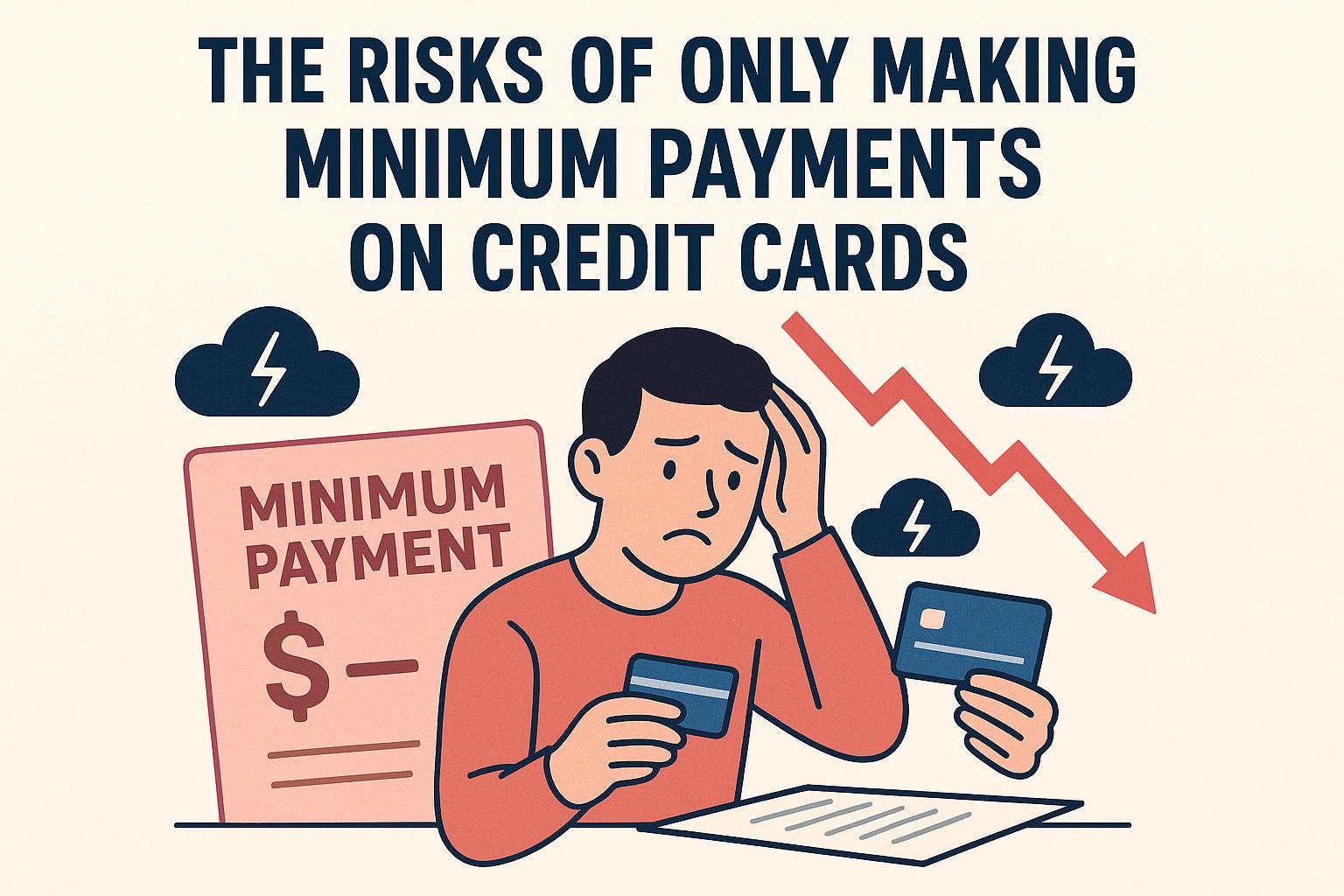
The Risks of Only Making Minimum Payments on Credit Cards
In the realm of personal finance, managing credit card debt remains a significant challenge for many individuals. Credit cards offer convenience, but they also come with the potential for financial pitfalls if not managed wisely. A common misconception among credit card holders is the belief that making only the minimum payment each month suffices for effective debt management. Although it might seem manageable short-term, this strategy can lead to a host of financial issues in the long term. A deeper understanding of these risks is crucial for anyone aiming for effective personal financial management.
Accumulating Interest
One of the most significant risks associated with paying only the minimum amount due is the accumulation of interest charges. Typically, credit cards carry high-interest rates, often topping 15% Annual Percentage Rate (APR) and sometimes even higher, depending on the issuer and the cardholder’s creditworthiness. When an individual opts to pay only the minimum required amount, any unpaid balance begins to accrue interest. Over time, the accumulated interest means that the total amount owed can grow substantially, turning an otherwise manageable debt into a significant financial burden.
This compounding effect can be eye-opening when examined closely. Interest charges are usually calculated daily or monthly, and because they are added to your existing balance, they begin to earn interest themselves. Therefore, it becomes essential to pay attention not only to the principal — the original amount borrowed — but also to the continuously growing interest, which can exceed the initial purchase amount if left unchecked for too long.
Extended Repayment Period
Another notable drawback of making only minimal payments is the extended repayment period it necessitates. Credit card companies often calculate the required minimum payment as a small percentage of the outstanding balance, generally between 1% to 3%. This small percentage is designed to keep consumers paying on their debts for a longer time, which, in turn, benefits the credit card companies through the accumulation of interest charges. The unfortunate consequence for the cardholder is that this strategy can markedly prolong the repayment timeline, often taking years and, in severe cases, even decades to clear the debt entirely.
This drawn-out financial obligation can make debt repayment seem like an unending commitment, tethering individuals to their creditors indefinitely. The lengthy repayment period can also sidetrack consumers from other financial goals, such as saving for a down payment on a house, investing in retirement funds, or building an emergency savings account.
Lower Credit Score
Paying only the minimum amount can negatively impact your credit utilization ratio, a critical factor in calculating an individual’s credit score. The credit utilization ratio is the total amount of credit card debt compared to the available credit limit across all credit cards. A higher utilization ratio can occur when significant balances are left unpaid for extended periods, a likely scenario when one makes only minimum payments. This can effectively decrease your credit score, casting a shadow over your financial reputation.
A lower credit score can have multiple adverse repercussions. It can affect your ability to secure loans — such as mortgages or car loans — on favorable terms. Additionally, it can potentially influence decisions made by landlords, employers, and utility companies. Maintaining a low credit utilization ratio is a prudent step toward preserving a healthy credit score and, by extension, a sound financial standing.
Potential for Increased Debt
Making only the minimum payment might also tempt individuals into a pattern of continuous credit card usage without substantial repayment, exacerbating existing debt levels. This is particularly true if consumers regard the remaining credit limit on their cards as available money for spending. This mindset can easily lead to an increased overall debt, thereby deepening the financial challenge faced each month.
The cycle of accruing new debt while making only minimum payments can quickly become untenable. It can create a snowball effect where existing debt fuels further borrowing, trapping individuals in a persistent cycle of debt that becomes increasingly difficult to escape. It is a scenario that underscores the importance of exercising discipline and making informed financial decisions.
Paying More in the Long Run
Although making the minimum payment each month might provide some short-term financial relief by leaving you with more immediate disposable income, this strategy can lead to paying much more than the original purchase amount over time. The accrued interest increases the overall cost of the items purchased, effectively inflating the price well beyond their original value. As the principal balance remains unpaid, the interest continues to mount, and the total expenditure on the credit card ensures that the cost of financial complacency is felt in the long term.
Strategies for Effective Credit Card Management
Understanding the risks associated with minimum payments is the first step towards implementing effective credit card management strategies. By embracing proactive measures, individuals can take charge of their financial health.
Increasing Monthly Payments
A straightforward but effective strategy is to strive to pay more than the minimum amount due whenever possible. Even a modest increase in payment can make a substantial difference in the interest payments saved over time. By putting extra money toward your credit card balance, you can accelerate the debt repayment process, reducing interest costs and freeing up funds for other financial priorities.
Budgeting and Planning
Creating a comprehensive budget aids in managing personal finances more effectively. A well-designed budget can empower individuals to allocate funds sensibly, prioritize debt repayment, and minimize unnecessary expenses. This disciplined approach to spending can assist in reducing credit card balances more quickly and preventing future financial challenges.
Utilizing Balance Transfers
Another effective technique is to consider a balance transfer. By transferring your current balance to a credit card with a lower interest rate or a 0% introductory rate for balance transfers, you can potentially decrease the amount of interest accrued, allowing more of your payments to chip away at the principal debt. Balance transfers can be a valuable tool when used responsibly, offering a reprieve from high-interest rates and a path to faster debt elimination.
Conclusion
While the idea of making only minimum payments each month on your credit card might initially seem like a manageable strategy, this approach carries long-term financial costs and consequences. Understanding the inherent risks and taking proactive strategies to manage credit card debt can pave the way for improved financial health. By focusing on paying more than the minimum, creating effective budgets, and exploring options such as balance transfers, individuals can work towards reducing their credit card debt and setting themselves on a path toward better financial stability.